Popular Posts

Showing posts with label Alok Utsav. Show all posts

Tuesday, 16 August 2011

Recliner Production


Taking off from our 3 ideas discussed in the prototype stage to make our bed recline, we zeroed in on either using an electric car jack and/or the water equilibrium/pump idea as our final mechanism.

After making the prototype of our bed out of wood using the mechanism of the car jack as a lever, we encountered certain problems in the functioning of the bed. The wheel at the side of the bed, connected to the jack, still required considerable amount of manual force to be rotated which cannot be utilized by old people. And this was primarily because wood as a material is heavy and far too flexible and flimsy, compared to metal. So the wood could never really hold the jack together and allow it to offer a smooth transition between 0 to an optimal 75\80 degrees of inclination. In order to overcome this hurdle we decided instead to start with a light metal frame, and replaced the manual car jack with an electric one at a slightly higher cost.

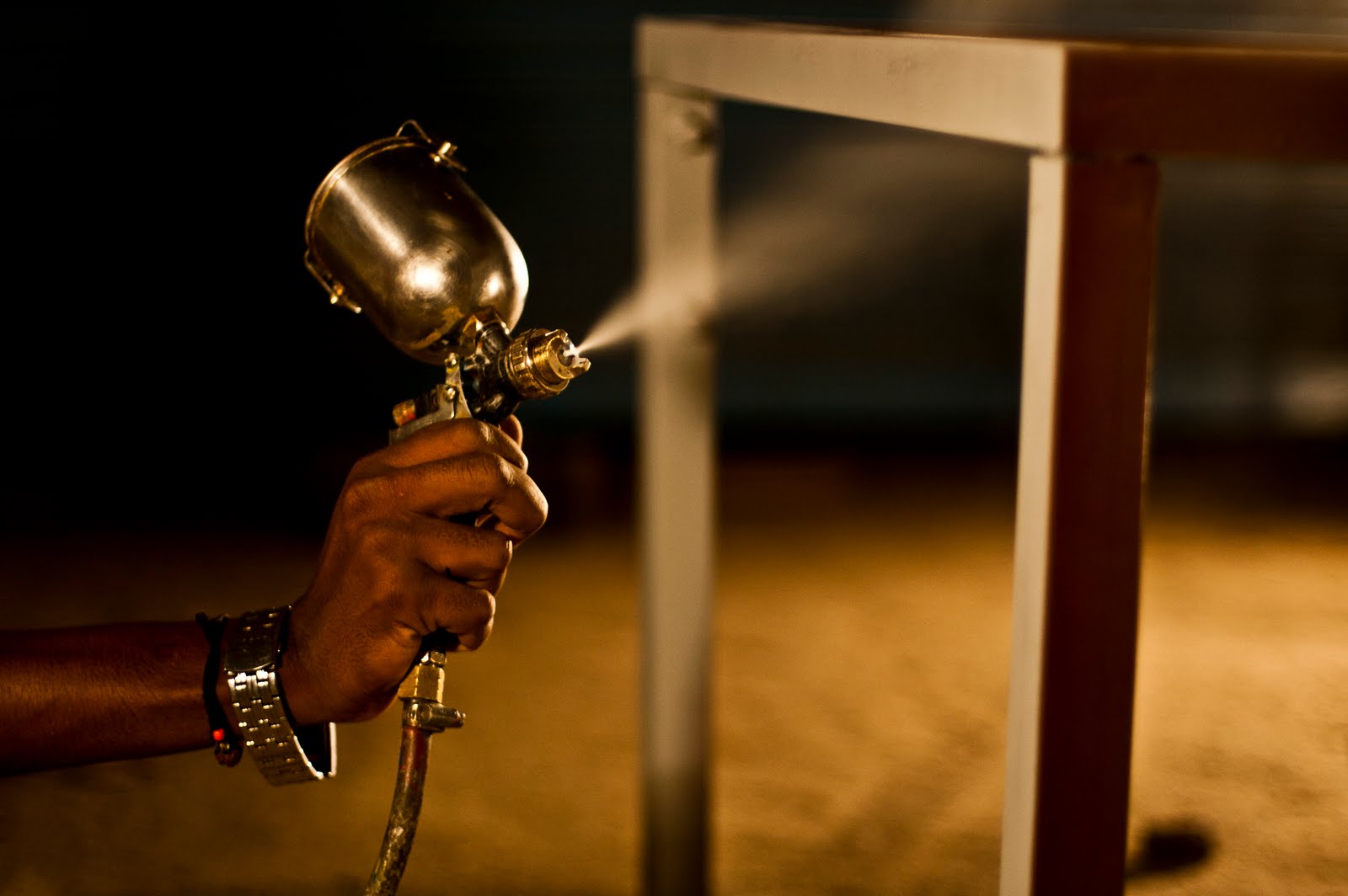
So we started work at a workshop in the city with an access to a welder, lots of scrap metal and power-tools. Immediately, we saw many loopholes appear in our water equilibrium design, though it wasn't exactly impossible to achieve, we decided to shelve it until we finished the other mechanism as we were working against the clock. After about 11 hours of deliberation with the metal frame including some unforeseen re-adjustments and last minute hiccups, we at the end managed to complete the basic frame work including a fully functional electronic reclining mechanism.


Tuesday, 9 August 2011

Thursday, 4 August 2011

The Indian Recliner


As we gets older our muscles begin to slowly lose their strength and we have difficulties in getting up from our beds or chairs as we don’t have the ability to carry our weight on our back. With an outlook to improve the existing situation of bad design incorporated in reclining beds for the aged at homes, old age homes and hospitals, we are setting out to make it much easier for ‘The Grand Patients’ to be self sufficient in reclining their beds.

There are 2 prevalent systems of reclining beds present in India apart from an electric alternative. One involves the caretaker to physically turn a crank situated at the end of the bed near the foot of the person lying on the bed. The other system has notches on the back of the reclining bed which the caretaker has to manually shift and prop it up with the help of a metal rod. The problem with both lie in the fact that they are extremely hard to negotiate with by the patients\patrons themselves. Also combined with the fact that these beds cost a minimum of twenty thousand rupees, while the electric one can set one back by anywhere between thirty to eighty thousand, a cheaper\handier alternative seems very viable considering the Indian perspective.

We have three proposals -

1. With the help of a set of gears incorporated in the working of the reclining bed, the patient can themselves control the extent of recline of the bed by rolling a small wheel, situated on their side at an arms distance, which is attached to the gears. This motion is facilitated by a counterweight extending from underneath the bed, which helps bring the top half of the bed to a semi upright
position. [Fig 1.2 and 1.2]

Fig. 1.1
Fig. 1.2

2. The patient can control the extent of recline of the bed by pressing two buttons, one for either direction, situated on the side of the bed at an arms distance. These buttons will be connected to a handy\cheap car hydraulic jack situated underneath the bed to move the counter weight.

3. This idea is a pure original. Keeping in mind the original counterweight idea, a motor pump [a simple alternating pump] is used to pump water as a weight to and fro from a tank affixed to the bed, to vary the extent of recline of the bed. There will be two buttons again on the side of the bed which would be connected to the pump. [Fig 2.1 and 2.2]

Fig 2.1

Fig 2.2

The option that turns out to be the most viable after making the prototype and figuring out material and cost will be the decided option to work on.


- Alok Utsav & Siddhanth Shetty

Wednesday, 27 July 2011

Media Influence

Nightingales Elder Day Care Centre is located in Malleswaram, Bangalore. On 26th July 2011 we took part in a meeting about media. Although the subject of conversation was not directly related to our project we still learnt a lot in the few hours we spent there.

Firstly, the seniors seemed well prepared with their speeches beforehand and intent on speaking for its own sake. Funnily, the discussion lacked a single path of logic and the speakers appeared to attend to be heard rather than to listen, respond and discuss (opinion).

Secondly, the elders we spoke to were vehemently opposed to being referred to as "old", and protested with such cries as "we are young at heart!" This begs the question, what is wrong with being old? This rejection of self-image probably stems from the abundance of negative stereotypes associated with aging. Moreover the natural deterioration of mind and body is nothing to be ashamed of, yet the consequent dependency chagrins or burdens.

Media influence is likely the culprit. It, particularly advertisements, are designed to make us feel inadequate and insecure about balding, wrinkles, age spots and grey hairs, all of which were symbolic of wisdom in days not long gone by.

Although most stereotypes regarding senior citizens are harmless and fact-based, some
misconceptions perpetuated by the media can be offensive and misleading. Furthermore, many
advertisements and television programmes are designed to make the audience feel insecure about
wrinkles, age lines and spots, balding, grey hairs: the physical manifestation of a natural process.
Incidentally in most countries senior citizens watch more television than any other age group.

However a disproportional number of leading characters are of the same. This is contrary to the
obvious train of logic that dictates that the majority of viewers should be able to relate to the
majority of protagonists. This discrepancy indicates an underlying assumption that there is an ideal
age that all – if not most – people desire to exist at, and more importantly that this age is well below
65.

Visit to Nightingales


Saturday, 23 July 2011

Libido and Age

With theirs bodies slowing down with time and age, sexual libido, among seniors, continues to be as racy a topic as ever. Numerous studies have shown that though the body goes through momentous changes through the ages 50-60, the human body is still capable of yearning for companionship. The changes include menopause in women, which in certain cases can occur over a few years, leading to low levels of testosterone, a hormone that is key to healthy sexual libido, which women produce in their ovaries and adrenal glands. As other ovarian hormone levels drop after menopause or surgical removal of the ovaries, so does the amount of desire-boosting testosterone. Andropause also leads to a drop in testosterone which in turn leads to a loss of energy and concentration, depression, and mood swings. These symptoms often lead\add to stress, which may culminate in impotence. Psychological factors such as a lack of privacy and/or intimacy, stress or fatigue, distraction or depression can very well contribute to a huge drop in libido among both the sexes. This drop in libido is both, natural and expected and does not necessarily need to hamper one’s sexual lifestyle. With the advent of Viagra and hormone supplements anyone can lead an active, satisfied sex life regardless of age.

Friday, 22 July 2011

A Glimpse Into The Future

This digital rendition of a much, much older version of me, is an attempt to place and visualize myself as a senior citizen.
[Concept Note Underway]

Outlook

People say that the youth are our future, but the statement leaves out the obvious counterpart: our elders are our past, our culture and traditions and everything else that defines us. We are shaped by them in ways we can cannot begin to understand. This is a space to express our respect and gratitude for those that came before us. In the next five weeks we intend to intimate ourselves with the seniors in our community so as to understand their way of life and if possible, improve on it in what little way we can.